
In this article
- The Ever-Evolving World of SEO: Separating Fact from Fiction
- SEO Myth #1: The “Set It and Forget It” SEO Myth – Why It’s an Ongoing Process
- SEO Myth #2: The Keyword Stuffing SEO Myth – Focus on Natural Language & User Intent
- SEO Myth #3: The Backlink Quantity Over Quality SEO Myth – The Truth About Authority
- SEO Myth #4: The Instant SEO Results Myth – Why Patience & Long-Term Strategy Pay Off
- SEO Myth #5: The Social Signals as Direct Ranking Factors SEO Myth – Indirect Benefits Explained
- Conclusion
The Ever-Evolving World of SEO: Separating Fact from Fiction
Welcome to the dynamic realm of digital marketing. Here, visibility isn’t just a goal; it’s a prerequisite for success. At the heart of achieving this visibility lies search engine optimization, or SEO. This isn’t just about technical tweaks; it’s a comprehensive digital marketing strategy aimed at improving your website’s ranking on search engine results pages (SERPs) to drive organic search traffic.
However, precisely because SEO is so vital and constantly evolving, it has become fertile ground for misunderstandings. These persistent SEO myths aren’t just minor errors; they can actively derail your efforts, waste resources, and prevent your business from truly flourishing online. Believing common SEO myths can lead to outdated practices and missed opportunities that seriously impact your online visibility.
This guide aims to cut through the noise. We’ll dive deep into five of the biggest SEO myths, providing clarity and setting the record straight. Understanding these false beliefs is the first, and arguably most crucial, step toward building a truly effective and future-proof SEO strategy. By debunking these SEO myths, you can focus on what genuinely moves the needle for your online presence, ensuring you’re working with SEO truths rather than fables.
SEO Myth #1: The “Set It and Forget It” SEO Myth – Why It’s an Ongoing Process
One of the most widespread and detrimental SEO myths is the idea that SEO is a one-time project. Many believe that once initial optimizations are complete, they can simply “set it and forget it,” moving on to other marketing endeavors. This couldn’t be further from the truth.
In reality, effective search engine optimization is a continuous, dynamic process that demands ongoing attention and adaptation.
Consider the landscape of search itself. Google, the dominant force in the industry, is notorious for its relentless pursuit of providing the best possible results to its users. This means constant Google algorithm updates—from minor tweaks to significant core updates—that can drastically alter website ranking factors.
What worked brilliantly for your site yesterday might become less effective, or even counterproductive, after a new algorithm rolls out. Relying on an outdated approach is a direct consequence of this persistent SEO myth. To stay competitive and maintain organic search traffic, businesses must continuously monitor these changes and adjust their SEO strategies accordingly.
Beyond algorithm shifts, the competitive landscape is always in motion. Your rivals aren’t static; they are actively working on their own SEO strategies for 2025 and beyond. As they optimize their content, build authority, and refine their technical SEO, your site’s relative position on the SERP can shift.
Ignoring this continuous competition is another facet of the “one-time SEO” myth. To sustain or improve your rankings, you need to be just as proactive, conducting regular SEO audits and adapting to market changes.
Furthermore, user behavior evolves, and so does the relevance of your content. People’s search intent changes, new trends emerge, and older content can become stale. Regularly refreshing your content, expanding on existing topics, and ensuring your information remains valuable and accurate are crucial for maintaining user engagement.
This commitment to ongoing content optimization ensures your site remains a useful resource. If you treat SEO as a finished task, you quickly fall behind on content freshness and relevance, highlighting why this particular SEO myth is so damaging to long-term success.
SEO Myth #2: The Keyword Stuffing SEO Myth – Focus on Natural Language & User Intent
Another pervasive SEO myth harks back to an earlier era of search engines: the belief that simply cramming as many keywords as possible into your content will guarantee higher rankings. This outdated tactic, known as keyword stuffing, is not only ineffective today but can actively harm your website’s performance.
The reason this SEO fallacy persists stems from a time when search algorithms were far simpler. They primarily matched queries to pages based on keyword density. However, search engines have evolved dramatically.
Modern algorithms, powered by sophisticated Natural Language Processing (NLP) and machine learning, are designed to understand context, semantics, and the true intent behind a user’s search query, not just the repetition of specific words.
They prioritize content that genuinely answers questions and provides value, recognizing when keywords are forced or unnaturally inserted. Trying to outsmart these advanced systems with brute-force keyword repetition is a losing battle and a textbook example of a detrimental SEO myth.
Beyond algorithmic penalties, keyword stuffing severely compromises the user experience (UX). Imagine reading an article where every other sentence shoehorns in the target keyword. It’s jarring, difficult to read, and provides little to no real value. High-quality content is readable, engaging, and flows naturally.
When users encounter keyword-stuffed content, they quickly leave, leading to a high bounce rate. This signals to search engines that your page isn’t helpful, indirectly affecting your website’s ranking factors. While it may not always trigger a direct “keyword stuffing penalty” in the traditional sense, Google’s continuous focus on helpful content updates means that artificially inflated keyword density works against you.
This makes overcoming this particular SEO misconception critical for creating truly effective content.
Instead of fixating on quantity, a smarter approach involves strategic keyword use. This means identifying relevant primary, secondary, and LSI (Latent Semantic Indexing) keywords, then integrating them naturally into your content.
The goal isn’t to hit a specific density but to create comprehensive, well-written pieces that fully address user intent, using a variety of related terms that demonstrate your expertise. This authentic approach to content optimization is what truly resonates with both users and search algorithms, focusing on SEO truths over outdated tactics.
SEO Myth #3: The Backlink Quantity Over Quality SEO Myth – The Truth About Authority

Among the most enduring and potentially damaging SEO myths is the idea that all backlinks are good backlinks and that the sheer number of links pointing to your site is the sole determinant of authority. This “quantity over quality” mindset is a relic of the past and can severely jeopardize your SEO efforts.
In the earlier days of search, a higher volume of links often equated to higher rankings. This led to widespread “black hat SEO” practices, such as buying links from link farms or creating numerous low-quality directories simply to inflate link counts.
However, modern search engines, particularly Google, have become incredibly sophisticated at evaluating the nature and value of backlinks. They prioritize links from authoritative, relevant, and trustworthy sources with high domain authority and page authority. A single high-quality backlink from a respected industry website is infinitely more valuable than hundreds of low-quality, spammy links. Understanding this crucial difference is vital to dismantling this widespread SEO myth.
The danger of embracing this SEO misconception lies in the potential for Google penalties. Search engines are designed to identify and penalize manipulative link-building schemes. If your website is found to be engaged in practices like purchasing irrelevant links, participating in large-scale link exchanges, or using automated link generators, you risk manual or algorithmic penalties that can decimate your organic search traffic and dramatically lower your website ranking factors.
Such penalties are difficult and time-consuming to recover from, underscoring why neglecting backlink quality in SEO is so perilous. This is one SEO myth you absolutely cannot afford to believe.
Instead, the focus should be on ethical “white hat SEO” link building. This involves creating truly valuable and shareable content that naturally attracts links from other reputable websites. Strategies like guest blogging on relevant industry sites, developing strong relationships with influencers, and conducting original research that others cite are far more effective.
When a respected site in your niche links to your content, it acts as a genuine vote of confidence, signaling to search engines that your content is a credible and valuable resource. This authentic approach to earning backlinks is the only sustainable path to building true online authority and dispelling the “all backlinks are good backlinks” SEO myth.
SEO Myth #4: The Instant SEO Results Myth – Why Patience & Long-Term Strategy Pay Off
One of the most persistent and, frankly, frustrating SEO myths for businesses is the expectation of instantaneous results. Many new to digital marketing hope that once a website is launched and initial SEO work is done, organic search traffic will surge overnight. This notion of “instant SEO results” is a dangerous myth that can lead to disappointment and premature abandonment of a genuinely effective strategy.
The reality of how SEO works is far more nuanced and time-consuming. Search engines, particularly Google, need time to crawl, index, and thoroughly evaluate your website’s content and technical structure. Even after indexing, it takes time for algorithms to assess your site’s relevance, authority, and user experience signals in relation to countless other websites.
This evaluation process involves complex algorithms that consider hundreds of website ranking factors, and it simply doesn’t happen in a matter of days or even a few weeks. The expectation of immediate gratification is a key component of this widespread SEO myth.
Furthermore, the competitive landscape plays a significant role in the timeline. If you’re entering a highly competitive industry, ranking for valuable keywords will naturally take longer because you’re competing against established players with years of accumulated authority and optimized content. Even with perfect execution of SEO best practices, dislodging entrenched competitors from top SERP positions is a gradual process.
To truly understand SEO for beginners, it’s helpful to use an analogy. Think of SEO less like flipping a light switch and more like planting a garden. You prepare the soil (technical SEO), plant the seeds (content creation), and then consistently nurture them with water and sunlight (ongoing optimization, link building).
You don’t expect to see a full harvest overnight; it takes time for roots to establish and plants to grow. Similarly, with SEO, you invest consistently, and over time, you begin to see the fruits of your labor in increased organic search traffic and improved rankings.
Expecting instant SEO results is a major SEO myth that often leads to frustration before the strategy has had a chance to mature. For most businesses, significant, measurable improvements typically manifest over several months, often 6 to 12 months, and sometimes longer for highly competitive terms. Patience, consistency, and a long-term perspective are not just recommended; they are essential for SEO success.
SEO Myth #5: The Social Signals as Direct Ranking Factors SEO Myth – Indirect Benefits Explained
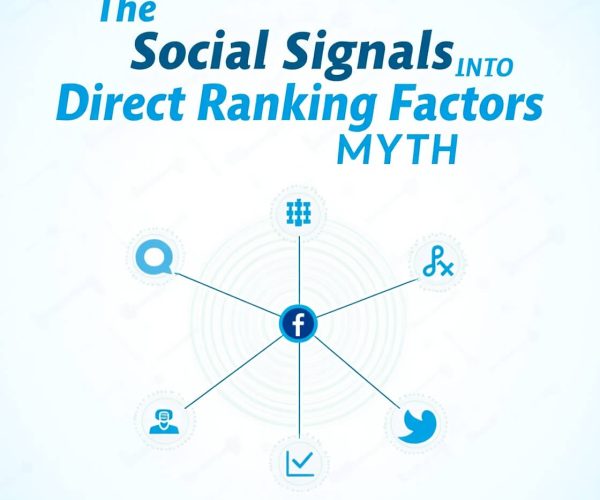
Another prevalent SEO myth is the belief that a high number of social media likes, shares, or followers directly boosts your search engine rankings. Many assume that if a piece of content goes viral on platforms like X (formerly Twitter) or Facebook, it will automatically climb to the top of Google’s search results. However, this is a common misunderstanding of how search algorithms function.
Search engines, including Google, have repeatedly clarified that social media signals are not direct website ranking factors. This means that the number of likes your Facebook post receives or the virality of your tweet does not, in itself, directly influence your position on the SERP. The algorithms are designed to evaluate content and websites based on their own complex set of criteria, not necessarily by the popularity metrics of independent social platforms. Clarifying this is crucial for anyone looking to understand SEO for beginners and avoid falling prey to this specific SEO myth.
However, dismissing social media entirely would be a mistake, as it offers significant indirect SEO benefits. While not a direct ranking factor, social media can drive substantial organic search traffic to your website. When people share your content on social platforms, it increases its visibility, potentially leading to more visitors. This increased traffic can improve engagement metrics on your site, which can indirectly signal to search engines that your content is valuable and relevant.
Furthermore, social media serves as a powerful tool for brand building and content discovery. A strong, active presence on social platforms can increase brand awareness and authority. As your brand becomes more recognized, people are more likely to search for your brand directly (branded searches), which can be a positive signal to search engines.
Social media can also facilitate natural link building; if your content is widely shared and gains traction, it’s more likely to be discovered and linked to by other reputable websites, and these backlinks are indeed a strong website ranking factor.
So, while social signals aren’t direct SEO signals, they are an integral part of a comprehensive digital marketing strategy that can support and amplify your SEO efforts. Dispel this SEO misconception, and you’ll see how social media can be a valuable ally.
Conclusion
To succeed in the dynamic world of search engine optimization, it’s crucial to shed these common SEO myths. Effective SEO is about providing genuine value to your users, understanding and adhering to webmaster guidelines, and committing to a long-term, adaptive strategy.
Forget about quick fixes, keyword stuffing, or spammy links. By focusing on user experience, content optimization, and ethical practices, you’ll build a robust online presence that thrives in 2025 and beyond.
FAQ
Is SEO a one-time thing, or do I need to keep doing it?
No, SEO is definitely not a one-time task. It’s an ongoing process. Search engine algorithms constantly update, competitors are always optimizing, and user behavior evolves. For sustained success and to avoid falling behind, continuous content optimization, technical SEO maintenance, and monitoring of Google algorithm updates are essential. This is a major SEO misconception.
Does more keywords automatically mean better ranking?
Absolutely not. This is a significant SEO misconception. Overstuffing your content with keywords (keyword stuffing) can actually harm your rankings and lead to a poor user experience. Modern search engines understand natural language and context, prioritizing high-quality, relevant content that genuinely answers user intent, using keywords naturally.
How long does SEO take to show results?
SEO is a long-term strategy, and instant SEO results are a common SEO misconception. While minor improvements might be seen in weeks, significant results, like noticeable increases in organic search traffic and top website ranking factors positions, typically take 6 to 12 months or even longer, especially for new websites or highly competitive keywords. Patience and consistent effort are key.
Do social media shares directly improve my SEO rankings?
Social media activity, like likes and shares, does not directly influence your SEO rankings. This is a common SEO misconception. However, social media can indirectly benefit SEO by driving traffic to your site, increasing brand visibility, and potentially leading to natural backlinks and mentions, which are direct ranking signals.
Want help putting this into action?
Talk to our team about SEO, Google Ads, social media or a new website. We will look at where your business is today and show you the next steps, free of charge.