
In this article
- Introduction
- 1. Master SEO Keyword Research for Targeted Traffic
- 2. Optimize Meta Tags for Organic Search Visibility & Clicks
- 3. Prioritize High-Quality, User-Centric Content for Organic Growth
- 4. Structure Content with Optimized Header Tags (H1, H2, H3)
- 5. Craft SEO-Friendly URL Structures for Clarity
- 6. Boost Website Loading Speed for Enhanced SEO & UX
- 7. Prioritize Mobile-Friendliness for Modern SEO Success
- 8. Cultivate High-Quality Backlinks for Enhanced Authority
- 9. Enhance SEO with Strategic Internal Linking
- 10. Optimize Images with Descriptive Alt Tags for SEO & Accessibility
- 11. Guide Search Engines with Optimized Meta Robots Tags
- 12. Implement Schema Markup for Richer Organic Search Results
- 13. Perfect Your Navigation Structure for UX & SEO
- 14. Continuously Update & Refresh Content for Ongoing SEO Relevance
- 15. Leverage Analytics to Monitor & Optimize SEO Performance
- 16. Craft Compelling & Keyword-Rich Page Titles
- 17. Amplify Organic Reach Through Social Media Engagement
- 18. Craft Engaging Meta Descriptions for Higher Organic Click-Through Rates
- 19. Proactively Monitor & Resolve Broken Links for SEO Health
- 20. Stay Ahead by Embracing Evolving Organic SEO Trends
- Conclusion
Introduction
Organic search engine optimization (SEO) is the essential process of enhancing your website’s presence and ranking on search engine results pages (SERPs) naturally, without relying on paid ads.
For businesses looking to improve online visibility and drive qualified traffic, mastering organic SEO strategies is paramount.
These top 20 organic search engine optimization tips provide a foundational blueprint for boosting your website’s performance in Google and other search engines.
From refining your site’s technical structure like meta tags and header usage to crafting compelling, high-quality content, each element plays a critical role in strengthening your organic search footprint.
Implementing consistent SEO keyword research, ensuring regular content updates, and maintaining a responsive web design are key factors that significantly contribute to achieving higher organic rankings.
By diligently applying these actionable organic SEO best practices, you’ll attract more targeted visitors and build a powerful, sustainable online presence through effective organic search optimization.
1. Master SEO Keyword Research for Targeted Traffic

Effective SEO keyword research is the bedrock of any successful organic SEO strategy. It’s about more than just finding words; it’s about uncovering the precise language and search queries your ideal customers use when looking for information, products, or services online.
This crucial step helps you align your website content directly with user search intent, dramatically improving your site’s visibility in organic search engine results.
Utilize powerful keyword research tools like Google Keyword Planner, SEMrush, or Ahrefs to gain invaluable insights into search volume, competition, and related keyword ideas.
By identifying and selecting highly relevant, high-potential keywords – including valuable long-tail organic keywords – you can strategically tailor your content to specifically address user needs and significantly increase your chances of securing top rankings on search engine result pages.
For example, if you sell organic skincare, in-depth keyword analysis might reveal popular phrases such as ‘best organic skincare brands for sensitive skin’ or ‘natural anti-aging creams that work.’ Seamlessly integrating these semantic keywords throughout your content will boost your appearance in relevant organic searches.
The ultimate goal of organic keyword research is to truly understand the exact phrasing and questions your potential customers ask. This insight empowers you to create highly resonant content, thereby driving more qualified organic traffic to your website.
Remember, the digital landscape evolves, so regularly updating your target SEO keyword list based on performance data and emerging industry trends is vital for continuous search engine optimization success.
2. Optimize Meta Tags for Organic Search Visibility & Clicks
Mastering the optimization of meta tags, including your page’s title tags and meta descriptions, is a critical component of effective organic search engine optimization.
These small but mighty elements are your website’s first impression in the SERPs. To significantly boost your content’s visibility and entice more clicks, strategically integrate your primary and secondary keywords into these vital tags.
This immediately signals your content’s relevance to both search engines and potential visitors, driving valuable organic traffic.
Crafting compelling and informative meta descriptions is key. This concise summary of your webpage’s content acts as an advertisement, encouraging users to click through.
For example, if you operate a bakery in New York City, a meta description that includes ‘best artisanal cupcakes in NYC’ will highly appeal to users actively searching for local baked goods.
Your meta description should not only entice but also clearly set expectations for what users will find on your page, motivating them to explore further.
Always ensure each meta tag accurately reflects the content of its corresponding page, as this precision helps search engines fully grasp your website’s context. Pay close attention to current character limits set by Google and other search engines to prevent truncation in the SERPs, ensuring your full message is conveyed.
To maintain a competitive edge in organic search rankings, make it a routine practice to review and update your SEO meta tags based on performance data and evolving keyword trends.
3. Prioritize High-Quality, User-Centric Content for Organic Growth
Producing truly high-quality and unique content is paramount for achieving sustainable success in organic search engine optimization. It’s not just about writing; it’s about delivering genuine value.
By creating informative, engaging, and well-researched content that directly addresses the intent behind your target keywords, you’ll significantly boost your website’s visibility and authority in search results.
For example, if you’re a fitness blogger targeting the user query ‘how to simplify healthy meal prep,’ you wouldn’t just list tips.
Instead, you’d craft a comprehensive article detailing practical meal prep strategies, step-by-step recipes, and clever time-saving hacks, ensuring it directly answers your audience’s questions and solves their pain points. This approach not only resonates deeply with your audience but also establishes your expertise and credibility in your niche.
Your focus should always be on providing valuable, in-depth information that thoroughly addresses the specific needs and concerns of your target audience. This commitment to value will powerfully boost your site’s organic traffic and user engagement.
Strive for consistency in delivering high-quality content across all pages of your website for maximum SEO impact.
Furthermore, enriching your content with multimedia elements like compelling images, insightful infographics, and engaging videos can dramatically enhance the overall user experience, making your content more visually appealing and shareable, which indirectly supports improved organic search rankings.
Ultimately, making high-quality content creation your top priority lays a robust foundation for long-term organic SEO success and sustained online growth.
4. Structure Content with Optimized Header Tags (H1, H2, H3)
Effective use of header tags, particularly H1s, H2s, and H3s, is fundamental for organizing your website content for both human readers and search engine crawlers.
By implementing these header tags strategically, you effectively emphasize key sections, subtopics, and crucial points within your content, making it significantly more navigable and user-friendly.
When integrating relevant keywords into your header tags, always ensure it feels natural and avoid any form of keyword stuffing. For example, for a page dedicated to ‘Organic Search Engine Optimization Tips,’ your main title (H1) should clearly state the page’s topic.
Then, for each individual tip or subtopic, leverage H2s (and H3s for sub-sections within tips) to break down the information.
This structure not only dramatically improves the readability and overall organization of your content but also signals to search engines the most important themes, enhancing your content’s chances of ranking higher in organic search results.
Always strive for header tags that are concise yet highly informative, offering a clear, quick glimpse into what each section covers. This practice contributes to a superior user experience and significantly boosts your SEO optimization effectiveness.
5. Craft SEO-Friendly URL Structures for Clarity

Optimizing your website’s URL structure is a foundational element for highly effective organic search engine optimization. Strive for URLs that are clear, concise, and directly incorporate relevant keywords that accurately describe the page’s content.
Avoid convoluted, overly long, or jargon-filled URLs, as these pose challenges for both users and search engine crawlers.
Always use hyphens to separate words within your URL (e.g., organic-seo-tips), which significantly improves readability and accessibility.
For instance, instead of a cumbersome URL like www.examplewebsite.com/blog/category/2022/article-title-about-seo-tips-for-beginners, opt for a clean, keyword-rich version such as www.examplewebsite.com/organic-seo-tips/beginners-guide.
This streamlined structure not only enhances user experience but also explicitly signals the main topic of your page to search engines, instantly improving its relevance.
By thoughtfully incorporating your targeted keywords into your URLs, you can further amplify your site’s overall SEO performance and its visibility in organic search results. Remember that every technical detail of your website, including its URL structure, plays a significant role in improving your search rankings and driving valuable organic traffic.
Applying these URL optimization tips will directly enhance user engagement and ultimately lead to superior SEO outcomes for your website.
6. Boost Website Loading Speed for Enhanced SEO & UX
Improving your website’s loading speed is an absolutely critical factor for superior organic search engine optimization. Search engines, particularly Google, increasingly prioritize fast-loading websites because they deliver a better user experience. Optimizing your site’s speed can provide a significant boost to your search rankings.
To achieve lightning-fast load times, implement strategies like:
- Compressing images: Reduce the file size of large image files without compromising visual quality.
- Minifying CSS and JavaScript: Remove unnecessary characters and spaces from code to reduce file sizes, directly enhancing site performance.
- Leveraging caching techniques: Store frequently accessed data locally on a user’s browser, drastically reducing load times for returning visitors.
Tools such as Google PageSpeed Insights offer invaluable insights, pinpointing specific areas where you can further optimize your loading speed. By consistently implementing these proven strategies, you’ll not only enhance the overall user experience but also significantly increase your chances of ranking higher in organic search engine results pages (SERPs).
7. Prioritize Mobile-Friendliness for Modern SEO Success

In today’s mobile-first digital landscape, ensuring mobile-friendliness is absolutely crucial for achieving robust organic SEO success. With the vast majority of online users accessing websites via smartphones and tablets, optimizing your website for mobile devices is key to significantly improving your search engine rankings.
A responsive web design ensures that your site seamlessly adapts to various screen sizes, providing a consistent and intuitive user experience across all devices. Consider this: if a potential customer searches for a local service on their smartphone and lands on a non-mobile-friendly website, they’re highly likely to abandon it quickly and move to a competitor.
This results in lost engagement and conversion opportunities. In contrast, a truly mobile-optimized site with easy navigation and rapid loading times dramatically enhances user satisfaction and increases your potential to capture leads or drive sales.
To stay ahead in organic search engine optimization, consistently implement best practices such as compressing images for quicker mobile loading speeds and crafting concise, easily digestible content for smaller screens.
By prioritizing mobile optimization, you not only cater to the prevalent online behavior of today’s users but also send a strong signal to search engines that your site is user-centric, current, and deserving of higher organic rankings.
8. Cultivate High-Quality Backlinks for Enhanced Authority
A cornerstone strategy for significantly improving your website’s domain authority and search engine rankings is to actively build high-quality backlinks from highly reputable and relevant websites within your industry.
Backlinks from well-established, authoritative domains act as powerful votes of confidence, signaling to search engines that your site is trustworthy, credible, and a valuable resource.
Effective methods for acquiring these valuable SEO backlinks include:
- Strategic Guest Blogging: Contribute insightful articles to authoritative websites in your niche, showcasing your expertise and providing genuine value to their readership, often with a natural link back to your site.
- Influencer Outreach: Collaborate with relevant industry influencers who can naturally promote your content to their engaged audience and link back to your site.
- Creating Link-Worthy Content: Develop exceptionally valuable, comprehensive content, such as in-depth guides, original research, or compelling case studies. This type of valuable content naturally attracts backlinks as other websites organically reference it as a resource.
By consistently pursuing these proven link-building strategies, you will progressively increase the number of high-quality backlinks pointing to your site, ultimately enhancing its overall authority and boosting its visibility in organic search results.
9. Enhance SEO with Strategic Internal Linking
Within the realm of organic search engine optimization, perfecting your internal linking structure is absolutely vital for significantly improving your website’s overall visibility and crawlability.
By thoughtfully incorporating descriptive and relevant anchor text within your internal links, you provide clear context to both search engines and human users about the content of the linked pages.
For instance, if you have a detailed blog post on ‘The Benefits of Vegan Protein,’ you can internally link to related articles like ‘Delicious Vegan Smoothie Recipes’ or ‘Plant-Based Meal Prep Ideas,’ using keyword-rich anchor text.
This practice of strategically linking to important, related pages across your website helps to efficiently distribute link equity (or PageRank) throughout your site, thereby enhancing its overall SEO performance.
This efficient distribution means that search engines are more likely to prioritize crawling and indexing these crucial pages, directly boosting their potential for higher rankings.
Always make it a habit to regularly review and update your internal links to ensure they remain relevant, accurate, and valuable.
By consistently applying these organic search engine optimization tips related to internal linking, you’ll not only streamline user navigation on your site but also clearly signal the importance and relationships of specific pages to search engine crawlers, leading to better organic search results.
10. Optimize Images with Descriptive Alt Tags for SEO & Accessibility

Alt tags, formally known as alternative text descriptions for images, serve a dual and crucial role in organic search engine optimization. Firstly, by incorporating relevant keywords into your alt tags, you can significantly enhance the visibility of your website’s images in image search results, contributing to overall site visibility.
Secondly, and equally important, alt tags provide essential context for visually impaired users who rely on screen readers to navigate the web, making your content more accessible.
For example, when uploading an image of a vibrant, fresh fruit smoothie to your website, ensure the alt tag is descriptive and keyword-rich, such as: alt="Delicious and healthy organic fruit smoothie recipe". Avoid generic or unhelpful alt text like image123 or leaving the alt tag empty, as this can severely hinder your SEO efforts.
By accurately and concisely describing the visual content within the alt tag, you not only elevate your site’s accessibility standards but also powerfully reinforce the relevance of your website’s content for search engines. Remember, leveraging alt tags effectively is a straightforward yet impactful way to boost your website’s overall SEO performance and reach a broader audience.
11. Guide Search Engines with Optimized Meta Robots Tags
Optimizing meta robots tags is a critical, often overlooked, aspect of advanced organic search engine optimization. These specific HTML tags provide direct instructions to search engine crawlers, telling them precisely which pages to include (index) in their search results and which ones to exclude (noindex).\
For instance, strategically using a noindex tag on pages like login portals, administrative dashboards, or duplicate content pages can prevent them from appearing in public search results, reserving crawl budget for your most important content.
Conversely, the follow tag encourages search engines to crawl through all links found on a given page, passing along link equity.
By carefully optimizing these SEO meta tags, you actively help search engines better comprehend your website’s hierarchy and prioritize the indexing of your most valuable content. This direct guidance can significantly improve your site’s overall visibility and ranking in organic search results.
It’s vital to regularly review and update your meta robots tags to ensure they align perfectly with any changes in your website’s content, structure, or evolving SEO strategy. Correctly implemented meta robots instructions have a profound impact on how search engines perceive, crawl, and ultimately rank your website, directly influencing both your organic traffic and user experience.
12. Implement Schema Markup for Richer Organic Search Results
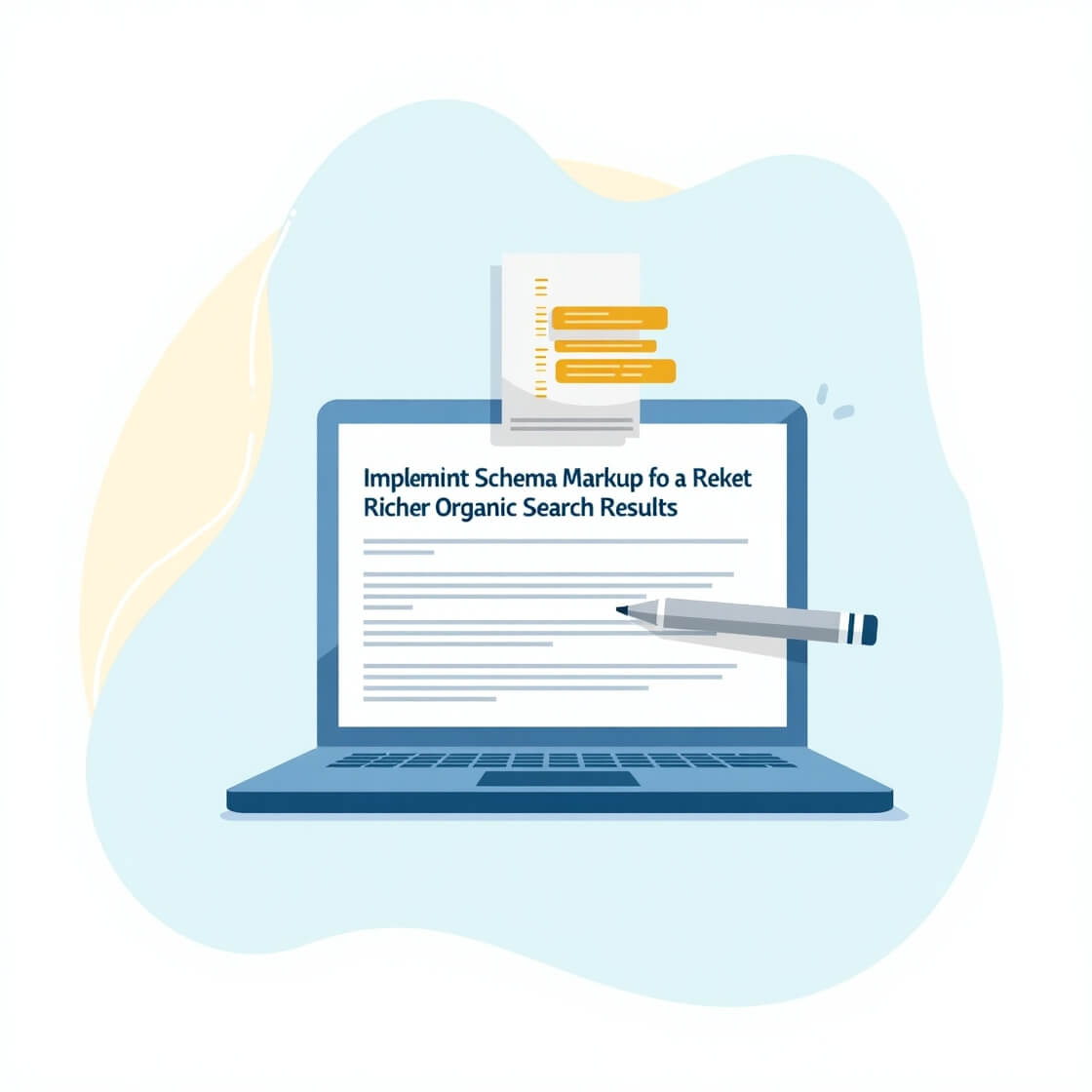
A powerful, yet often underutilized, component of advanced organic search engine optimization is the strategic use of schema markup on your website. Schema markup is a specific type of structured data that provides search engines with rich, explicit context about your content.
This deep understanding enables them to not only comprehend your information more thoroughly but also display it in enhanced, eye-catching ways directly within the search results.
By correctly implementing SEO schema markup, you can significantly boost your website’s visibility in SERPs and attract a higher volume of clicks from engaged users.
For example, if you run a recipe blog, applying recipe schema markup can allow search engines to display “rich snippets” showing key details like cooking time, ingredients, and even star ratings directly on the search results page.
This makes your listing far more appealing and increases the likelihood of users clicking through to your site.
Common types of structured data markup also include event listings, product reviews, FAQ schema, and local business information, each offering unique display opportunities.
Integrating schema markup into your comprehensive SEO strategy not only supercharges your website’s performance in search engines but also provides a better user experience by offering more relevant and informative search listings.
Thoroughly research the various schema types pertinent to your content and ensure their accurate implementation to maximize their impact on your organic search visibility and overall organic SEO success.
13. Perfect Your Navigation Structure for UX & SEO
Optimizing your website’s navigation structure is paramount for simultaneously enhancing user experience and improving search engine visibility.
By utilizing clear, descriptive, and keyword-rich anchor text for your navigation links, you empower users to effortlessly understand where each link will lead them.
For example, instead of generic phrases like ‘Click Here,’ opt for informative terms such as ‘Explore Our SEO Services’ or ‘Discover Our Digital Marketing Solutions’ to provide immediate context.
Organize your main navigation menu logically and intuitively, grouping related pages under clear categories. For instance, all pages detailing your services should be nested under a single, easily identifiable ‘Services’ menu item.
This logical arrangement not only streamlines the user journey but also significantly aids search engines in comprehending the hierarchical structure and importance of your website’s content.
By implementing these vital organic search engine optimization tips for navigation, you dramatically increase the likelihood of your most important pages being discovered and indexed by both human users and search engines.
A well-structured navigation system also actively works to reduce bounce rates and encourages visitors to explore more pages on your site, ultimately boosting engagement and conversions.
Remember, a robust and user-friendly navigation structure is an indispensable component of a successful website, effectively catering to the needs of your audience and the algorithms that govern organic search.
14. Continuously Update & Refresh Content for Ongoing SEO Relevance
A critical, ongoing component of effective organic search engine optimization is the consistent practice of regularly updating and refreshing your website’s content. This dynamic approach is absolutely essential for maintaining and improving your visibility in evolving search results.
By continuously adding new, valuable information, revising or removing outdated content, and strategically repurposing existing material, you ensure your content remains highly relevant, accurate, and engaging for your audience.
For example, if your blog focuses on fast-moving topics like ‘digital marketing trends,’ frequently posting updates on the latest developments in the industry and revisiting older articles with new data will consistently attract more visitors to your site. Furthermore, archiving obsolete articles or integrating the freshest available data significantly enhances your site’s credibility and authority in the eyes of search engines.
Intelligently repurposing existing high-performing content – transforming a popular blog post into an engaging video tutorial or an informative infographic – can also dramatically enhance user engagement and drive even more organic traffic to your website.
Search engines consistently favor websites that provide the most valuable, up-to-date, and comprehensive information to users. Therefore, maintaining content freshness is paramount for sustained organic search visibility success. In summary, content updates and refreshes not only boost your SEO rankings but also deliver a superior user experience by always providing the most current and relevant information.
Incorporating these practices into your broader organic search engine optimization strategy will undoubtedly lead to increased visibility and consistent organic traffic for your website.
15. Leverage Analytics to Monitor & Optimize SEO Performance
Diligently monitoring and analyzing your website’s performance is absolutely crucial for maximizing its effectiveness in organic search. By utilizing powerful SEO analytics tools like Google Analytics and Google Search Console, you can track key metrics such as website traffic sources (especially organic), bounce rates, user engagement, and conversion rates.
For example, if you observe an unusually high bounce rate on a specific landing page, it’s a strong indicator that either the content isn’t meeting user intent or the user experience needs significant improvement.
These organic search engine optimization tips are directly supported by robust data analysis. Deeply analyzing your organic search traffic data is essential for pinpointing precisely which keywords and content pieces are driving the most valuable traffic to your site.
By strategically focusing your optimization efforts on pages performing well for these high-impact organic keywords, you can attract even more highly targeted visitors and significantly improve your conversion rates.
Regularly monitoring and analyzing this detailed performance data empowers you to make informed, data-driven decisions to continuously enhance your website’s performance.
Making necessary, proactive adjustments based on actionable insights gained from your analytics will further optimize your website for an improved user experience and ultimately lead to superior overall organic search effectiveness.
16. Craft Compelling & Keyword-Rich Page Titles

Optimizing your page titles (also known as title tags) is a foundational and incredibly crucial aspect of effective on-page SEO. By strategically placing your primary targeted keywords at the beginning of your page titles, you immediately enhance their relevance for search engines and significantly increase the likelihood of users clicking through from search engine results pages (SERPs).
For instance, if your blog post offers ‘Sustainable Organic Gardening Tips,’ explicitly including these exact words at the beginning of your title, perhaps as ‘Sustainable Organic Gardening Tips: Your Complete Guide,’ will powerfully boost its visibility in organic search results. This practice effectively signals to search engines the core topic and value of your content, directly improving its chances of ranking higher for relevant search queries.
Consider another example: a webpage designed for new marketers titled ‘SEO Tips for Beginners’ should ensure these precise key phrases are prominent at the forefront of its title. Always remember that clarity, conciseness, and user intent are paramount when crafting impactful page titles for optimal SEO performance.
By consistently implementing these strategies and thoughtfully incorporating relevant keywords into your page titles, you can dramatically improve your site’s performance in organic search results, thereby driving substantially more organic traffic to your website.
17. Amplify Organic Reach Through Social Media Engagement
Strategically utilizing social media platforms is a crucial, though indirect, aspect of effective organic search engine optimization strategies. While social signals don’t directly impact rankings, consistent activity and broad content sharing on platforms like Facebook, X (formerly Twitter), LinkedIn, and Instagram can significantly expand your audience reach and drive valuable referral traffic to your website.
For example, sharing a new blog post on ‘Advanced Organic SEO Techniques’ on LinkedIn with an engaging visual or thought-provoking question can capture the attention of industry professionals. Actively interacting with your followers through comments, messages, and polls not only fosters genuine engagement but also helps build a loyal community around your brand.
Furthermore, sharing timely updates about new products or services on visual platforms like Pinterest or TikTok can generate considerable interest and encourage users to visit your site. For instance, creating visually stunning pins for new product launches on Pinterest can lead to increased organic traffic from users actively searching for related content.
By creatively leveraging the diverse features offered by various social media platforms – from informative live streams on YouTube to engaging Stories on Instagram – you can keep your audience deeply engaged and eager for your next piece of content.
Additionally, running social media contests or giveaways can dramatically increase brand awareness and attract new followers who may ultimately convert into loyal customers. Overall, while not a direct ranking factor, intelligently incorporating social media into your holistic SEO strategy is essential for maximizing your online visibility, amplifying content reach, and driving sustainable organic growth for your digital presence.
18. Craft Engaging Meta Descriptions for Higher Organic Click-Through Rates

Optimizing your meta descriptions is an absolutely essential practice for significantly improving click-through rates (CTR) in organic search engine optimization.
These concise snippets of text appear directly beneath your page titles in search results, serving as your site’s mini-advertisement and providing a brief, compelling summary of your webpage’s content.
Crafting highly compelling meta descriptions that include strong, clear calls-to-action can powerfully entice users to choose your website over competitors.
For example, a well-written meta description for an SEO guide might include phrases like ‘Learn how to dramatically boost your SEO ranking in 2025’ or ‘Get expert, actionable tips for optimizing your website for organic success.’ By incorporating these enticing and benefit-driven elements, you greatly increase the likelihood that users will click on your link.
Furthermore, naturally integrating relevant keywords and their semantic variations into your meta descriptions can enhance their visibility and perceived relevance for specific user queries.
Crucially, ensure that each meta description is unique, accurately reflects the content of its corresponding webpage, and avoids generic or vague language. Investing the time to precisely optimize your meta descriptions will have a tangible and positive impact on your website’s performance in organic search results and overall organic traffic.
19. Proactively Monitor & Resolve Broken Links for SEO Health
A fundamental practice for maintaining strong organic search engine optimization is the diligent monitoring and prompt fixing of broken links across your website. Broken links, whether internal or external, create a frustrating user experience and can significantly damage your site’s search engine rankings.
Regularly checking for and repairing these broken links is absolutely crucial for maintaining site integrity.
Imagine the frustration of a user clicking a link only to be met with a ‘404 Not Found’ error page – a clear sign of poor website maintenance. By ensuring your website is free of broken links, you guarantee visitors a seamless and professional Browse experience.
Search engines, too, highly value websites with consistently functioning internal and external links, as this signals credibility, high quality, and meticulous site management.
A common scenario leading to broken links is when a page is deleted or its URL is changed without updating all corresponding links pointing to it.
To preempt negative impacts on both user experience and your organic SEO performance, it’s highly recommended to implement tools (like Google Search Console’s ‘Crawl Errors’ report or dedicated SEO audit tools) that regularly scan for and identify broken links.
Taking proactive steps to monitor and resolve these issues will undeniably contribute to improving your website’s overall performance in organic search results.
Remember, optimizing the user experience through diligent link maintenance directly translates to better organic search rankings over time.
20. Stay Ahead by Embracing Evolving Organic SEO Trends
In the rapidly changing digital landscape, staying rigorously current with the latest organic SEO trends is not just beneficial—it’s absolutely crucial for maintaining and improving your high ranking in organic search results.
Google, for instance, frequently rolls out significant algorithm updates that can profoundly impact website visibility and rankings.
Keeping a keen eye on these crucial changes and swiftly adapting your SEO strategy accordingly is paramount to remaining competitive in the online arena.
A prime example of this continuous evolution is Google’s long-standing shift towards mobile-first indexing, where mobile-friendly websites are increasingly prioritized in search results.
By consistently ensuring your site is fully optimized for all mobile devices, you dramatically enhance your chances of securing higher organic rankings.
Another critical trend to actively monitor is the growing emphasis on holistic user experience (UX), which encompasses factors like blazing-fast page speed and intuitive website usability. These elements now play a remarkably significant role in overall SEO performance.
Furthermore, staying informed about cutting-edge emerging technologies such as voice search optimization and the increasing influence of artificial intelligence (AI) in SEO can help you proactively optimize your website for future shifts in search engine algorithms.
Regularly analyzing performance data from essential tools like Google Analytics and Google Search Console empowers you to identify areas for improvement and fine-tune your organic SEO strategy for superior results.
Remember, SEO is an incredibly dynamic and ever-evolving field, so continuous learning, experimentation, and agile adaptation are the definitive keys to maintaining a robust and thriving online presence.
Conclusion
By thoroughly incorporating these 20 crucial organic search engine optimization tips, you can significantly enhance your website’s online visibility and consistently increase targeted, high-quality traffic.
For instance, meticulously optimizing your meta tags and meta descriptions with relevant keywords and compelling calls to action will directly improve click-through rates on search engine results pages (SERPs).
Furthermore, regularly publishing high-quality, deeply informative, and keyword-rich content is paramount for establishing your credibility and authority within your industry.
Effectively utilizing proper header tags (H1s, H2s, etc.) and structuring your content for superior readability not only drastically enhances the user experience but also clearly signals the most important aspects of your content to search engines.
Conducting thorough keyword research, identifying user intent, and naturally integrating both short-tail and long-tail organic keywords throughout your website will further amplify its relevance in search results.
Moreover, optimizing images by using descriptive file names and accurate alt text not only boosts accessibility but also makes a measurable contribution to your overall SEO efforts.
Ensuring a responsive and mobile-friendly website design is no longer optional; it guarantees your website is easily accessible and performs flawlessly across all devices, making it highly appealing to both users and search algorithms.
Finally, by consistently monitoring your website’s performance data through analytics and making strategic, data-driven adjustments based on key metrics, you can continuously adapt and refine your organic SEO strategies for sustained improvement and long-term success.
Ready to propel your website’s organic search performance to the next level? Our expert team at Uppermark Solutions Limited is here to provide tailored solutions! Visit our SEO service page to learn how we can craft a comprehensive organic SEO strategy specifically designed to meet your business goals.
Don’t miss this opportunity to dramatically boost your online presence and drive more qualified organic traffic to your website — reach out to us today for a consultation!
FAQ
Organic SEO is the process of improving your website’s visibility on search engine results pages (SERPs) without paid advertising. It’s crucial because it drives qualified traffic to your site, builds brand authority and trust, and provides a sustainable, cost-effective way to attract potential customers who are actively searching for your products or services.
Regular content updates are vital. For fast-moving topics or competitive niches, updating weekly or bi-weekly can be beneficial. For evergreen content, a refresh every 3-6 months to ensure accuracy, add new insights, and include fresh keywords is highly recommended. Consistent content freshness signals to search engines that your site is active and relevant.
Meta tags, primarily the title tag and meta description, are HTML elements that provide concise information about your webpage’s content to search engines and users. They are crucial because they influence how your page appears in SERPs, directly impacting click-through rates (CTR). Well-optimized meta tags encourage users to click on your listing over competitors.
Backlinks are links from other reputable websites to your site. They act as “votes of confidence,” signaling to search engines that your content is valuable and trustworthy. High-quality backlinks from authoritative domains significantly boost your website’s domain authority and directly contribute to higher organic search rankings.
Absolutely. With the widespread use of smartphones, Google and other search engines prioritize mobile-friendly websites in their rankings. A responsive web design ensures your site offers an optimal user experience across all devices, which is critical for both user satisfaction and improved organic SEO performance.
Schema markup is a form of structured data that you add to your website’s HTML to help search engines better understand your content. When implemented correctly, it can lead to “rich snippets” in search results, displaying enhanced information like ratings, prices, or event dates, making your listing stand out and potentially increasing organic click-through rates.
You can check your website’s loading speed using tools like Google PageSpeed Insights. To improve it, focus on compressing images, minifying CSS and JavaScript files, and leveraging browser caching. Faster loading times enhance user experience and positively impact your organic search rankings.
Want help putting this into action?
Talk to our team about SEO, Google Ads, social media or a new website. We will look at where your business is today and show you the next steps, free of charge.